"Because we can't do anything about it." – Or you just don't want to?
One line from the SPD's campaign in Saxony-Anhalt explains why Germany's democratic parties are losing, and why that's a choice, not a constraint.
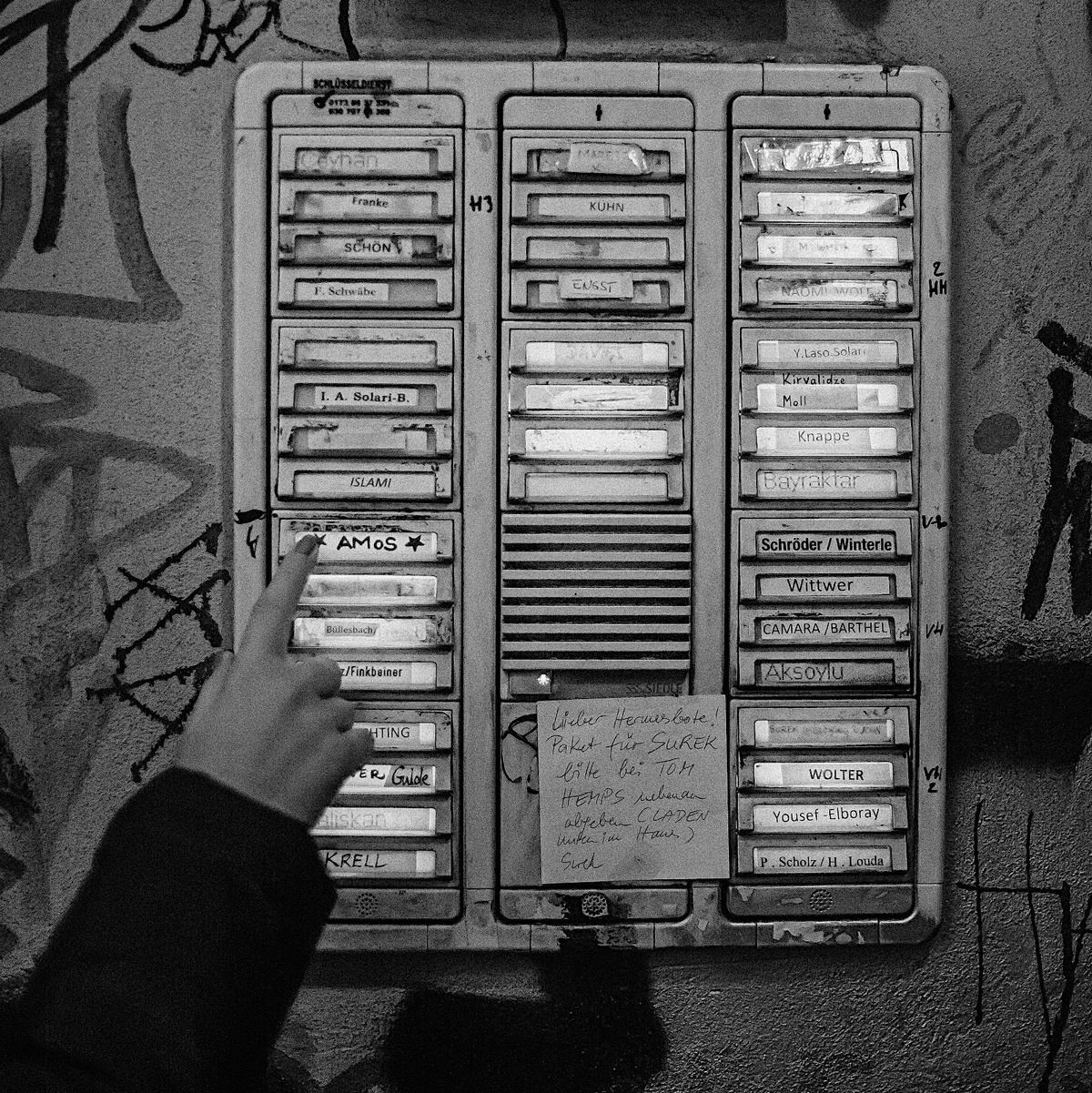
One line from the SPD's campaign in Saxony-Anhalt explains why Germany's democratic parties are losing, and why that's a choice, not a constraint.
"Because we can't do anything about it." The line belongs to Stephan Scherf, an SPD candidate in Halle, quoted in Der Spiegel on 12 August 2026. He meant federal policy: rising contributions, shrinking benefits, the baggage from Berlin that state candidates have to explain on every doorstep. The line is wrong. And because it keeps getting repeated on the campaign trail like an apology, it explains part of why Germany's democratic parties are losing ground in Saxony-Anhalt right now.
The "we" in this piece's title belongs to the democratic parties, not to me. I'm quoting the line to take it apart.
This piece is not a verdict on Scherf as a person, not a voting recommendation, and not an assessment of whether the AfD would govern better. It wouldn't. According to a study by the German Institute for Economic Research, the AfD's economic plans would hit Saxony-Anhalt hard, including the people in the Sangerhausen courtyard this piece ends on. This is about something else. About a political culture that leaves real instruments unused, then sells that inaction as helplessness.
Germany is a federal state. The Bundesrat, the upper chamber representing its sixteen states, is how those states shape federal policy, not symbolically, but as a matter of constitutional design. Some laws require the Bundesrat's actual consent, mostly tax legislation that touches state revenue, and on those it can block a bill outright. That's real veto power. Most pension legislation isn't in that category. Even the most recent pension package only needed the weaker form of approval, the kind the Bundesrat can object to but not stop. A veto was never on the table here.
That didn't make it powerless. The Bundesrat isn't a stage for symbolic criticism. It's an instrument with real political weight, even where it holds no absolute veto.
It could have objected, called in the mediation committee, forced the Bundestag into a second, public vote, visibly, at a higher threshold, at a political cost for everyone who backed it. None of that happened. Saxony-Anhalt's state government, which includes the SPD, never used that instrument either, even though pension policy is exactly what comes up most often at doorsteps in Sangerhausen and Halle. It preferred to stay inside the party machine rather than exercise the right to object that the constitution gives it.
Scherf's line and the facts don't add up. Whoever has an instrument and doesn't use it can't claim not to have one. That's not a constraint. That's a choice. And that choice is exactly what costs Scherf his excuse. Not ideologically. Mechanically.
I grew up in Raguhn. I left. University in Köthen, then Braunschweig, then the United States, then Berlin.
Boys born in Saxony-Anhalt have the lowest life expectancy of any German state: 76 years and 4 months, two and a half years below the national average, according to the current life tables. Saxony-Anhalt's economy shrank by 0.2 percent in 2025, while Germany's grew, and so did the rest of eastern Germany's. Factories closed after reunification. Then the people followed.
Nowhere in Germany is the surplus of men among 18- to 29-year-olds larger than in Saxony-Anhalt: 1,146 men for every 1,000 women, according to the Federal Statistical Office. Places young women moved away from, while young men stayed. The 22-year-old voting for the first time in his life came to the Simson motorcycle rally in Raguhn-Jeßnitz because Ulrich Siegmund actually showed up in his hometown. In person.
Siegmund goes there himself. He remembers names. He gets one message across: I'm fighting for you. The SPD candidate in Halle gets across something else: I manage a system I don't control myself, and I regret that. Those aren't equivalent messages.
The difference shows up in the television studio too. At the MDR debate in August, the CDU, SPD, Greens and Left answer concrete voter questions with process language: people need to sit down together, the will is there. Siegmund answers the same questions with a single word: root causes. It isn't an answer. But it sounds like one.
The mechanism isn't new. In 2016, Donald Trump didn't win because he was the more convincing candidate. He mobilized people who otherwise wouldn't have voted, against an establishment they no longer trusted to fight for them. Hillary Clinton's campaign didn't lose to his platform. It lost to its own arrogance, to the certainty that the votes belonged to it regardless. Saxony-Anhalt is repeating the same mechanics. Different names, different language, same structure.
That dominance didn't happen by accident. It's the result of years of systematic work: town-hall conversations, evening talks, family festivals, a constant presence in places other parties have avoided for years. Anyone who concludes Siegmund is simply the more likeable guy is missing the campaign behind him.
Even inside the Left Party, people privately envy the production quality of Siegmund's video output. Nothing stops a democratic party from working the same way: TikTok, professional photography, staff trained to speak freely on camera. That's not a question of policy. It's a question of campaign work, and campaign work costs money, time, staff. Whoever doesn't put that in anyway is missing either the ability or the will. Helplessness or arrogance. Both.
There's another level on which democratic parties underestimate their own agency—the state party itself. Anyone who thinks the national party is some outside authority they're at the mercy of misunderstands how a party actually works. State chapters send delegates, shape party conferences, help elect the national leadership. They are the party. Not its hostages.
Armin Willingmann, the SPD's lead candidate in Saxony-Anhalt, avoids joint campaign appearances with the party's national secretary-general. The state election, he says in substance, is a state decision, not a referendum on Berlin. Tactically, that's understandable. Strategically, it's the opposite of what the party needs right now.
The moment a state SPD publicly distances itself from the national SPD, it confirms the exact image it's trying to dispel. This party doesn't quite know what it stands for. Siegmund doesn't have that problem. There's no state self and no national self. There's just him. Where the AfD shows up as one block, the SPD shows up as two parties putting distance between themselves. That's not federal nuance. That's fragmentation, staged in public. And that's exactly what the others profit from.
The young man on the moped stayed. Siegmund came to him, no qualifications attached. The democratic candidates came too, to the same doors. Only what they said, in substance, was what Scherf said at the start of this piece: that's Berlin, we can't do anything about that.
The woman in Sangerhausen who lives on 150 euros a month isn't a convert to right-wing extremism. She's reachable. She's just not being reached, because nobody's giving her a reason to believe her life is going to change.
Three things, directly.
- Stop saying "we can't do anything about it." The line is self-defeating and factually wrong. Every time a democratic politician repeats it, they're telling voters something specific: Your vote changes nothing.
- Make the instruments of state politics visible, and use them visibly: the Bundesrat, which can object and call in the mediation committee, and the national party, which you help shape rather than just endure. Both currently unused. Visibly, at political cost, not just mentioned in Sunday speeches but actually exercised. Less "theater in Berlin," more real conflict, fought out in the open, for the sake of the actual voters being represented.
- Understand that Siegmund isn't winning because his platform is better. It would hurt everyone in that Sangerhausen courtyard economically. He's winning because he stages a fight, and the democratic parties stage administration. A better communications strategy alone doesn't close that gap. It only closes if the fight actually happens, with the instruments that already exist: the Bundesrat, and a campaign that deserves the name.
Four neighbors in Sangerhausen, camping chairs, cigarettes, beer. One of them uses racist language about migrants. Another lives on 150 euros a month, her eyes wet as she talks about it. In the end, all five take the SPD flyer.
Published: 2026-08-14